Planet Patterns
Planets travel around the Sun at different speeds.
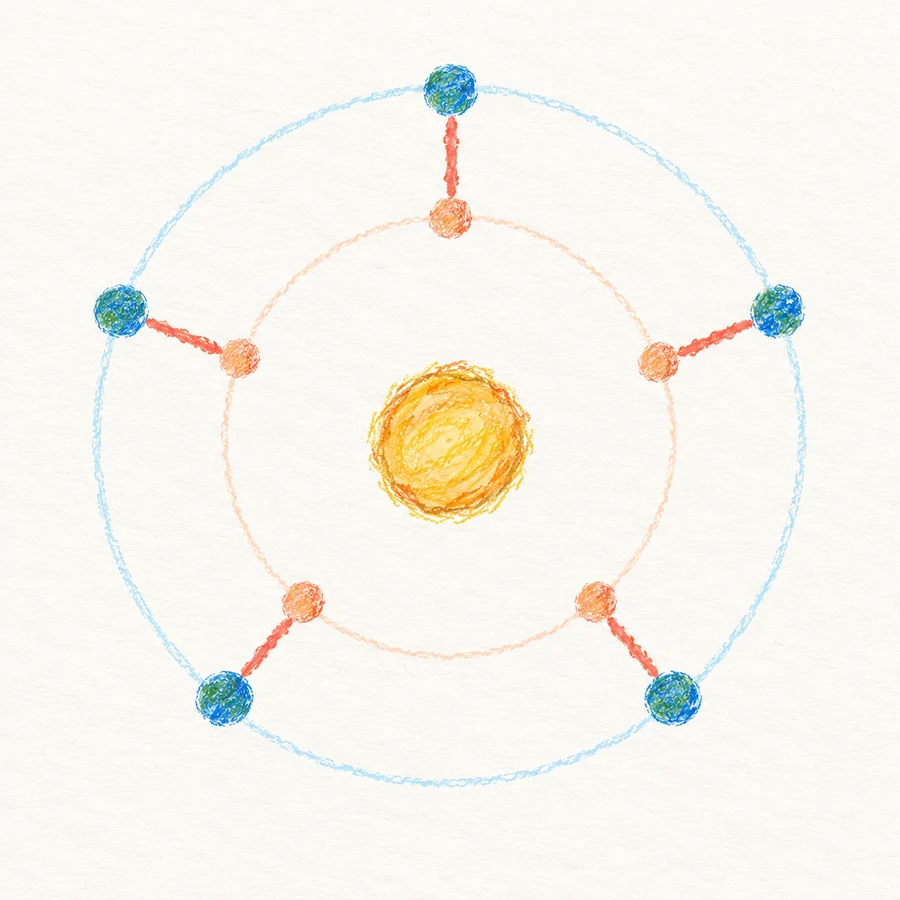
Connect two as they move, and patterns appear.
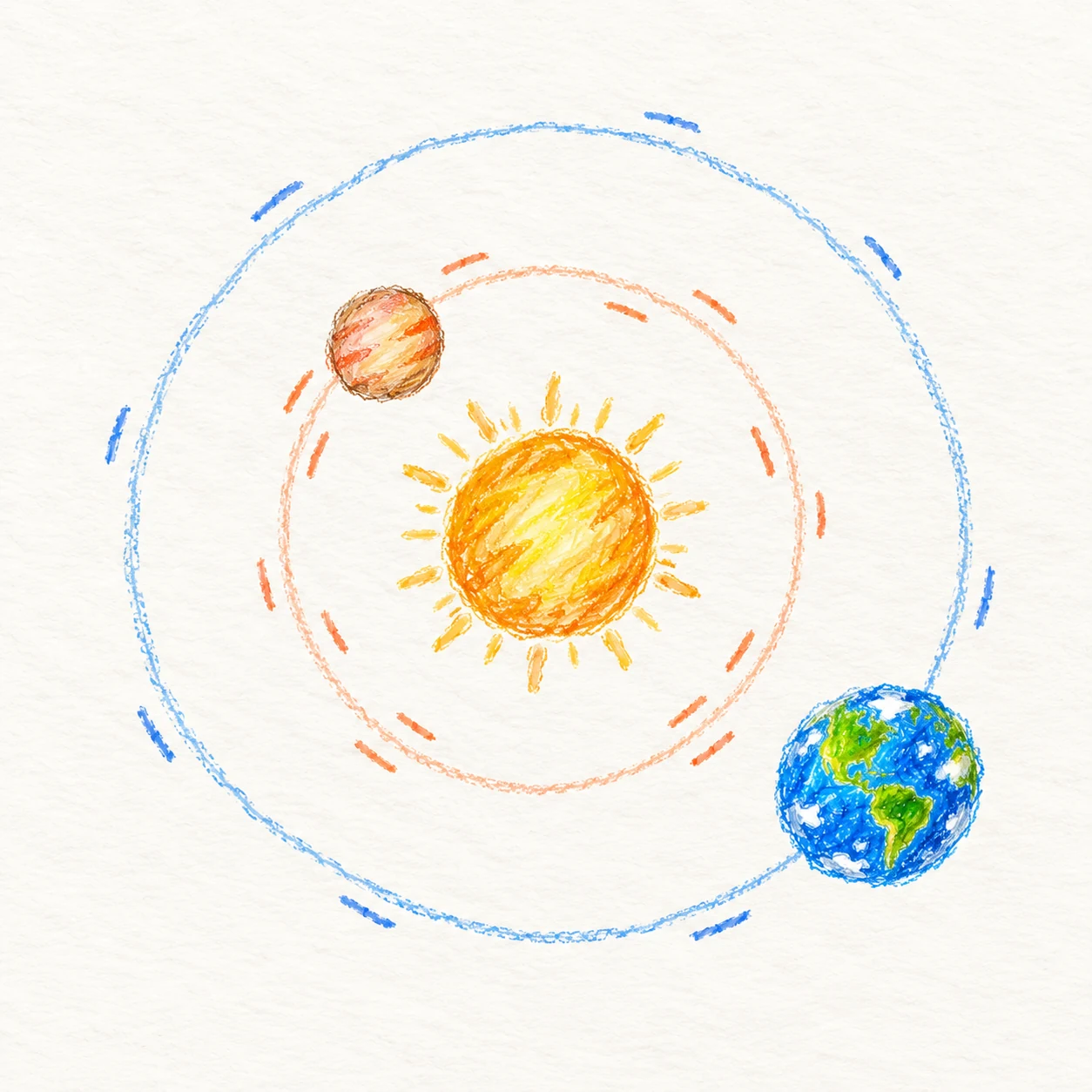
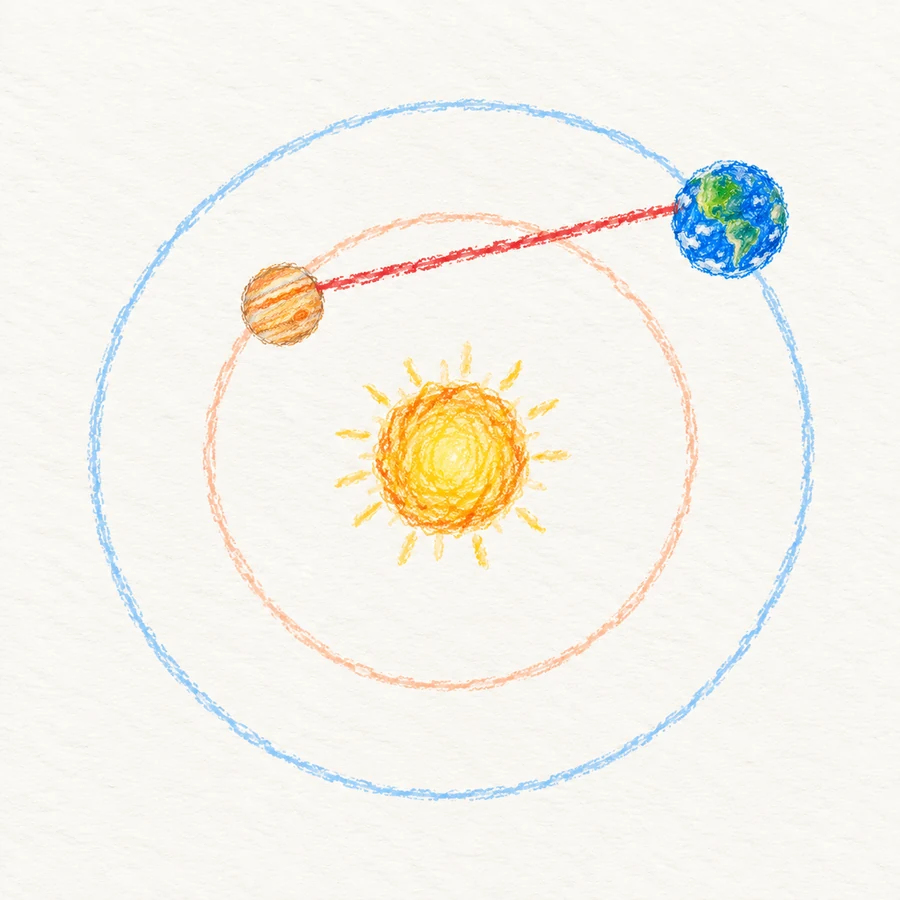
Lines connect the planets; they are not their paths or strings in space. Circular model, not to scale or today’s positions. Drawing windows are approximate, not exact repeat cycles.
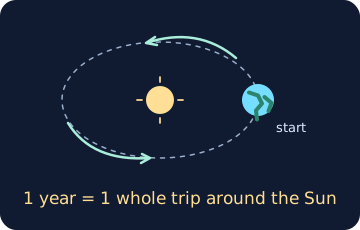
One year = one trip around the Sun.
Not through the Sun! Each world has its own year.
All times below are approximate, measured in Earth days or Earth years.
225 days + a moving Earth = a longer chase.
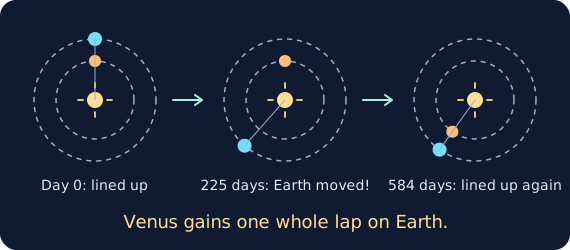
Venus finishes a lap in about 225 days. Earth takes about 365. But Earth keeps moving, so Venus needs about 584 days to catch up by one whole lap.
“Catch up” means lining up on the same side of the Sun, on separate tracks. No collision.
Show the math
1 ÷ (1/224.701 − 1/365.256) ≈ 584 days
Subtract their laps per day to find how quickly Venus gains. Then divide 1 lap by that gain.
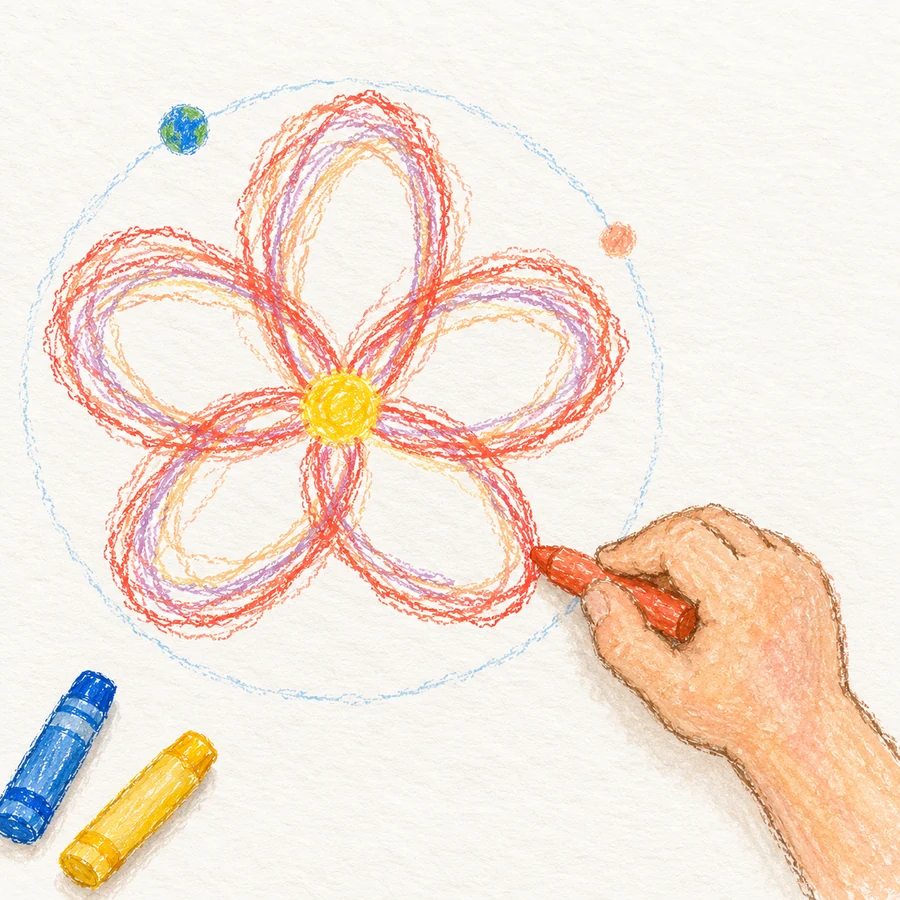
Tap a painting to open the original artwork. Open the printable drawing sheet ↗